


Real-Time Performance
Ensures precise motion control and AI-driven decision-making in dynamic environments
Mixed-Criticality Support
Partitioned architecture for Safety-critical and non-critical systems
AI & Multi-Core Optimization
Leverages advanced processors for efficient AI inference and parallel control tasks
Energy & Resource Efficiency
Optimized CPU and memory usage to reduce power consumption and system footprint
Pre-Certified Solutions
Accelerate compliance with ISO 26262, IEC 61508, and other robotics-relevant standards
Cybersecurity by Design
Robust, certifiable protection against cyber threats and unauthorized access
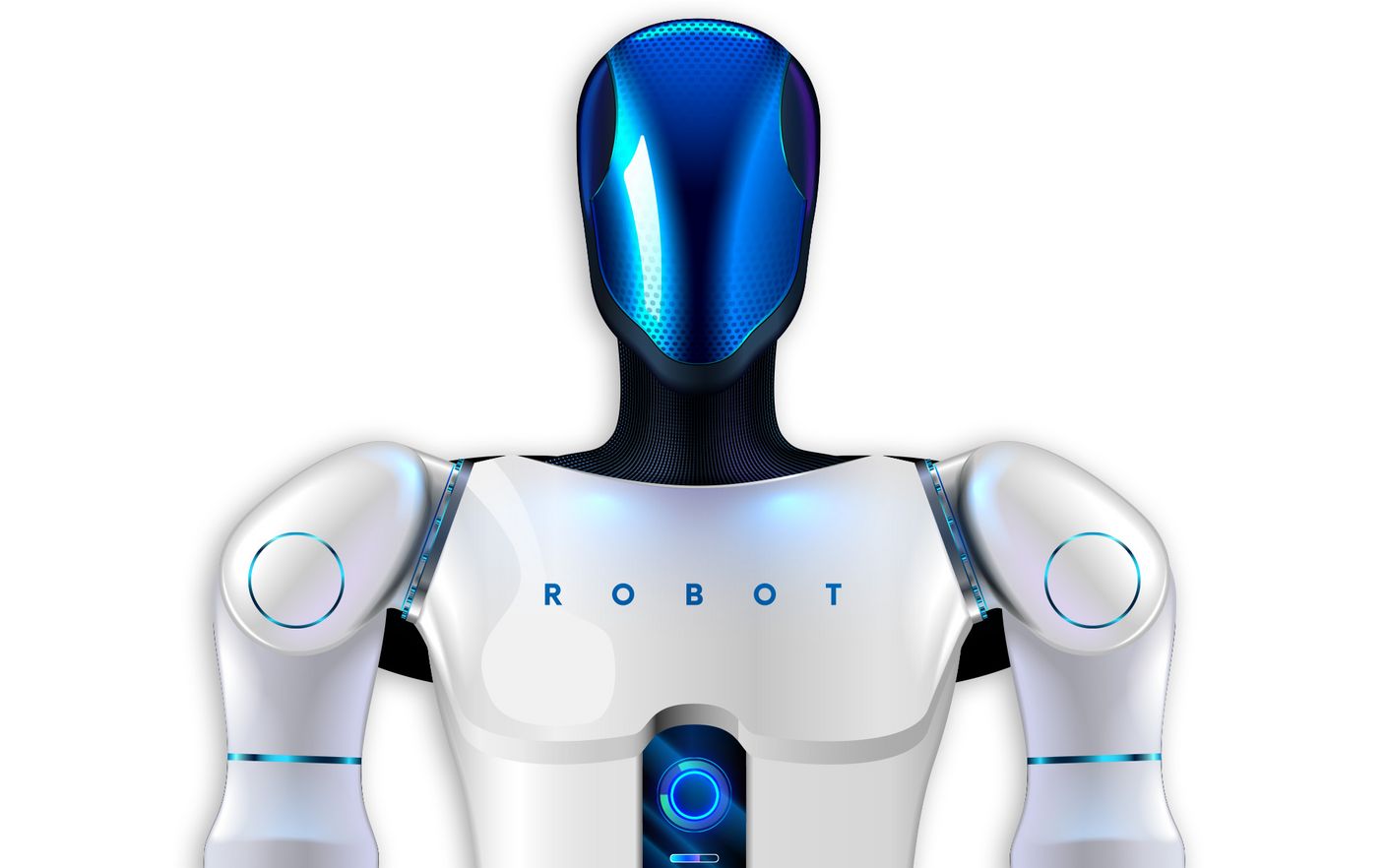

Human-Robot Collaboration
Safety-certified platforms enabling seamless interaction between humans and robots
AI & Sensor Fusion
Integrating machine learning, vision systems, and predictive algorithms for autonomous decision-making

Functional Safety & Security
Compliance with standards like IEC 61508, ISO 26262, and DO-178C to ensure operational integrity in critical tasks

Industrial Robotics & Cobots
- Real-time motion control for high-precision manufacturing
- Safety-critical partitioning ensures secure Human-Robot Collaboration (HRC)
Humanoid Robotics
- Advanced locomotion and manipulation powered by deterministic control loops
- AI and vision processing running alongside safety-critical functions in isolated partitions
Medical & Assistive Robotics
- Surgical robots requiring ultra-low-latency control and compliance with IEC 61508 and ISO 13485
- Rehabilitation robots needing real-time feedback for human-assistive interaction
Defense & Space Robotics
- Mission-critical robotic platforms for hazardous environments
- Secure communication and fail-safe redundancy for autonomous operations
Service & Logistics Robots
- Autonomous Mobile Robots (AMRs) for warehouses, hotels, and airports
- Partitioned environments for navigation, AI-based decision-making, and remote diagnostics
Research & Experimental Robotics
- Flexible and scalable environment for prototyping new control algorithms
- Safe integration of AI, machine learning, and custom hardware without compromising stability


Secure Partitioning
Run your full ROS 2 distribution (including complex packages like MoveIt and navigation stacks) inside a dedicated, isolated partition—often using a standard Linux guest OS
Safety Isolation
This untrusted, feature-rich ROS 2 environment is physically separated in memory and CPU time from the Safety-critical real-time control loops, which run directly on PikeOS's certified RTOS kernel
Deterministic Performance
Guarantee hard real-time deadlines for actuators and sensors, ensuring that the processing demands of the non-critical ROS 2 partition can never interfere with the robot's essential operational Safety
Flexibility
Utilize the vast open-source libraries of ROS 2 while leveraging SYSGO's certified frameworks for all mission-critical components, eliminating the need to certify the entire application

Guaranteed QoS
PikeOS's deterministic real-time scheduler ensures that the communication threads responsible for DDS data exchange receive the highest priority, guaranteeing predictable network latency and data delivery essential for synchronized multi-axis control
Security-by-Design
Utilize PikeOS’s robust Security separation to isolate different DDS domains or communication channels. This prevents a Security breach in one part of the system (e.g., diagnostic reporting) from compromising the integrity of the Safety-critical data flowing through the control loop (e.g., motor commands)
Mixed-Criticality Data
Seamlessly bridge data between different criticality levels. Use a DDS transport running in a secure PikeOS partition to reliably move commands from an untrusted Linux/ROS 2 application to a Safety-certified control application, simplifying your overall architecture while maintaining certification standards

Security Certification
PikeOS has achieved rigorous Security certification (Common Criteria EAL 5+). This is a level of assurance that few other robotics operating systems can claim, providing your OEMs with a verified, secure foundation
Tamper-Proof Updates
Use hardware-backed isolation and secure boot mechanisms to ensure that all software and firmware updates—especially remote Over-the-Air (OTA) updates—are genuine and untampered, protecting the robot from malicious code injection
Attack Surface Reduction
The separation kernel architecture and MILS (Multiple Independent Levels of Security) philosophy drastically reduce the attack surface compared to monolithic OS platforms. A breach in a non-critical partition (e.g., HMI or remote monitoring) cannot propagate to the control loop

Multi-Architecture Support
Extensive support for market-leading platforms: ARM, x86, PowerPC, and RISC-V. We show commitment to the ecosystem and avoid vendor lock-in, which is a major concern for OEMs
Emerging Standards & AI
Readiness for evolving standards like the new EU Machinery Regulation and the AI Act, which will impose strict Safety and Security requirements on robotics and autonomous systems. This positions SYSGO as a strong key partner in navigating this regulatory landscape
Safe Multi-Core Processing
PikeOS efficiently and safely utilizes multi-core SoCs, allowing OEMs to consolidate multiple electronic control units (ECUs) onto a single piece of silicon. This is the core driver for reducing BOM costs and system complexity.
Example: Dedication of one core to the Safety partition (motion control) and use of the remaining cores for the Linux/AI partition, all managed deterministically by the PikeOS hypervisor

CODEO IDE
SYSGO's CODEO IDE, which is based on Eclipse. It provides a unified environment for developing, debugging, and testing both the real-time (PikeOS) and the rich application (e.g. Linux) partitions concurrently
Advanced Debugging & Tracing
Powerful tools that are crucial for real-time systems, such as system level tracing, which helps engineers diagnose complex timing issues and latency spikes, dramatically cutting down on debug time
Certification Kit Integration
We provide the necessary documentation, artifacts, and tools required for certification (e.g., for IEC 61508). This gives the OEM’s Safety team a clear, auditable path to compliance, proving that SYSGO is a full-service partner, not just a software vendor
Find out more

Faster Certification & Compliance
Pre-certified Safety and Security frameworks (IEC 61508, ISO 26262, DO-178C, Common Criteria) reduce time-to-market for Safety-critical robotics applications
High System Integrity
Partitioned architecture isolates Safety-critical control loops from AI, vision, and non-critical functions, ensuring deterministic and reliable performance
Cost Efficiency & Consolidation
Multi-core virtualization allows multiple OS environments on a single hardware platform, reducing hardware costs and simplifying maintenance
Scalability for Future Innovation
Flexible architecture supports Linux, POSIX, and real-time guest OS, enabling robotics developers to integrate new algorithms, AI modules, and sensors without overhauling the embedded platform
Seamless Integration & Ecosystem Support
PikeOS provides compatibility with a wide range of middleware, sensors, actuators, and AI frameworks, simplifying system integration and enabling robotics developers to focus on innovation rather than low-level platform issues
Proven Track Record
Trusted in Aerospace, Automotive, and Industrial Automation sectors—now applied to robotics—providing confidence that PikeOS can handle the most demanding embedded challenges